
October on the Farmstead: Garlic, Strawberries, and Questionable Timing
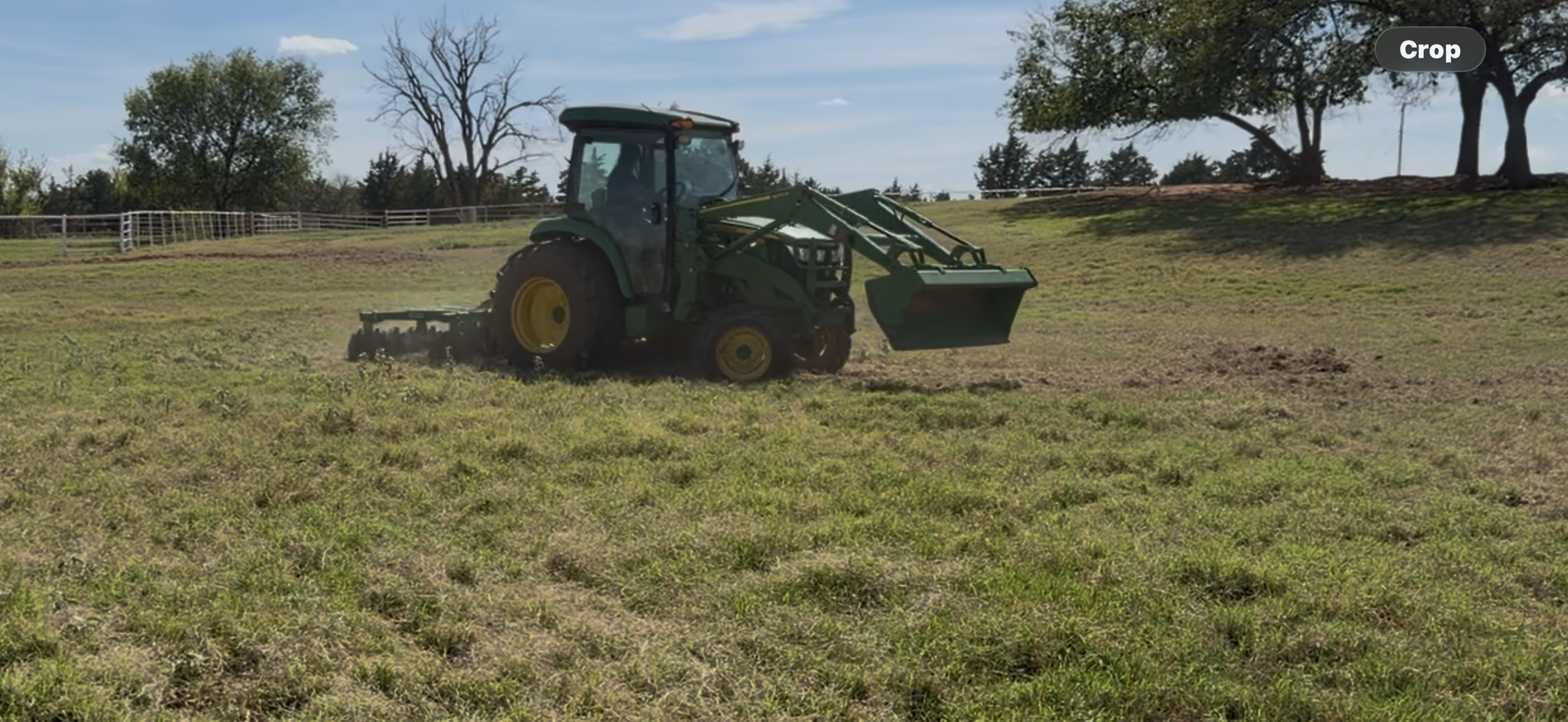
October on the farmstead has officially become the month where everything apparently needs to happen at once.
Because naturally, after finishing one project, the logical next step is to immediately start three more.
In May, we harvested our first garlic.
In October, part of that same garlic went right back into the ground.
And while most people are thinking about pumpkins, sweaters, and putting their gardens to bed for the year, we are getting ready to plant strawberries.
Yes.
Strawberries. In October.
Intentionally.
We checked.
From 100 Garlic Heads to 400 Cloves in the Ground
Earlier this year, we harvested approximately 100 heads of garlic.
Some of it was processed and kept for our own kitchen.
The rest was dried and saved specifically for replanting.
That gave us roughly 400 cloves to put back into the ground this October.
This is one of the parts of farmstead life we are starting to really love.
A harvest is not always the end.
Sometimes it is dinner.
Sometimes it is pantry storage.
Sometimes it is next year’s crop.
And sometimes it is all three.
Which feels much more satisfying than buying garlic at the grocery store, using three cloves, forgetting the rest in a drawer, and rediscovering it six weeks later with enough green shoots to start its own farm.
Progress.
And Now We’re Planting Strawberries
The next big October project is much larger.
We are planting strawberries.
A lot of strawberries.
And yes, we know October sounds like a strange time to do that.
That was our first reaction too.
But this one is actually intentional.
Oklahoma State University Extension notes that fall-planted strawberries in suitable parts of Oklahoma can establish a more extensive root system before spring, which can help the plants come into the growing season stronger.
So instead of asking the plants to immediately produce leaves, flowers, and fruit, we are giving them time to concentrate on roots first.
Which sounds very logical.
Until you remember that they will be spending winter outside.
In Oklahoma.
The Slight Problem With Our Brilliant Plan
The Farmers’ Almanac is forecasting a wetter, stormier winter for this part of the country, with the potential for periods of sleet, freezing rain, and wet snow.
So naturally, this is the year we decided to try fall-planted strawberries.
Of course it is.
Long-range forecasts are not guarantees, and we are not planning the entire crop around an almanac prediction.
But we are paying attention.
Too little moisture is a problem.
Too much moisture is a problem.
A hard freeze is a problem.
Apparently strawberries would prefer winter to happen, but politely.
We will see what Oklahoma decides.
Five Raised Beds, 100 Feet Each
Yesterday, we started the dirt work for the strawberry field.
Not plowing.
We are shaping the ground into five raised beds, each approximately 100 feet long.
That is 500 feet of strawberry beds.
Seeing the first beds take shape was one of those moments when the project suddenly stopped being theoretical.
It is one thing to say:
“We’re going to plant strawberries.”
It is another thing to look at 500 feet of dirt and realize:
“Oh. We are really going to plant strawberries.”
The raised beds should help with drainage and give us a more controlled planting area.
They will also make the field look much more organized than it currently does, which is encouraging because right now it looks mostly like a large amount of dirt and optimism.
Our Compost Was Not Ready
One part of this project did not go exactly according to plan.
We have been building our own compost, and eventually we want more of our soil amendments to come directly from the farmstead.
But compost does not care about deadlines.
Ours is not ready yet.
The strawberries, however, are.
So we purchased compost from another source to prepare the beds.
This was another good reminder that farmstead life is not about pretending every system is already perfect.
Sometimes your compost is ready.
Sometimes it is not.
Sometimes you buy compost and tell your own compost pile to please pick up the pace.
We are learning.
Drip Lines Under the Plastic
Once the beds are shaped and amended, we will install drip irrigation underneath black polyethylene mulch.
The plastic will cover the raised beds, and the strawberry plants will grow through openings in the mulch.
The drip lines underneath will deliver water directly into the soil around the roots.
OSU recommends drip-style irrigation for strawberries because it can conserve water and help reduce disease issues associated with constantly wet foliage.
The plastic mulch will also help suppress weeds and keep the berries cleaner.
Again, this sounds very simple when written down.
In practice, the list looks more like this:
Shape beds.
Add compost.
Install drip lines.
Lay plastic.
Secure plastic.
Make planting holes.
Plant strawberries.
Check irrigation.
Fix whatever we did wrong.
Check weather.
Recheck weather.
Stare suspiciously at the weather app.
Then plant faster.
Because Apparently We Have No Time
That may be the biggest theme of October.
Timing.
Garlic has a planting window.
Strawberries have a planting window.
Compost has its own timeline and apparently did not receive the memo.
Weather has absolutely no interest in our schedule.
And once the strawberry plants are ready to go in the ground, the entire system needs to come together quickly.
This is where farmstead planning on paper and actual farmstead work become two very different things.
On paper:
Plant strawberries in October.
Done.
In reality:
Prepare 500 feet of raised beds.
Get compost.
Move compost.
Shape beds.
Install irrigation.
Buy plastic mulch.
Lay plastic mulch.
Make holes.
Plant hundreds of strawberries.
Check the forecast.
Panic briefly.
Continue planting.
Much more accurate.
If This Works, May Should Be Very Fun
If everything goes the way we hope, the strawberry plants will spend winter establishing themselves and should be ready to produce next spring.
Our goal is to have strawberries around May, which lines up with normal spring strawberry harvest timing in Oklahoma.
And this crop has a bigger purpose.
We are planning our first Rein Maker Ranch Farmstead U-Pick strawberry event.
The idea is simple.
Instead of harvesting everything ourselves, families will be able to come to the farm, walk the rows, and pick strawberries themselves.
At least, that is the plan.
Between now and May, there are only a few minor details to work out:
Winter.
Rain.
Freezing temperatures.
Plant survival.
Flowers.
Pollination.
Birds.
Rabbits.
Deer.
Possibly children eating strawberries faster than anyone can weigh them.
Nothing major.
We’re Building This While We Learn
One of the things we said when we started the Rein Maker Journal was that we were not going to wait until the farmstead was finished and then tell the story as though everything went perfectly.
Because that would be fiction.
We want to document this while it is actually happening.
The successes.
The mistakes.
The things we researched.
The things we figured out halfway through.
And the moments when we stand in the middle of a field and wonder whose idea this was.
October feels like a very good example.
Garlic harvested in May is now becoming next year’s garlic crop.
Our compost is still cooking, so purchased compost is filling the gap.
Five 100-foot strawberry beds are beginning to take shape.
Drip lines and plastic mulch are next.
And hundreds of strawberry plants are about to spend an Oklahoma winter outside because, according to the research, that is exactly where we want them.
Assuming Oklahoma behaves itself.
Which feels optimistic.
If everything goes well, we will be standing in those same rows next May surrounded by strawberries.
And hopefully, some of you will be standing there with us.
October on the farmstead: 400 garlic cloves in the ground, 500 feet of strawberry beds underway, winter coming fast, and another very reasonable project that somehow turned into a race against the weather.
That feels about right.